Chapel of Reconciliation
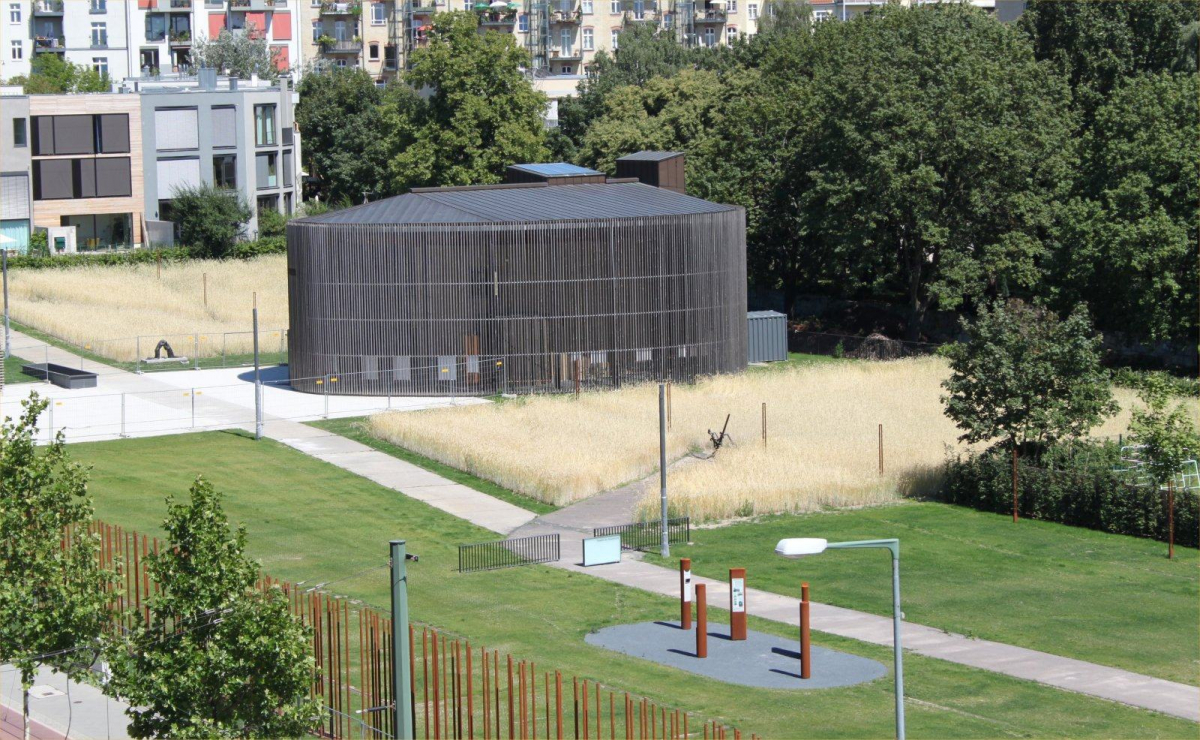
Chapel of Reconciliation on the grounds of the Berlin Wall Memorial, 2014 © Berlin Wall Foundation
Just a few meters from the entrance to the Church of Reconciliation ran the border with West Berlin. After the Berlin Wall was built, the neo-Gothic brick building, constructed in 1894, stood in the death strip—inaccessible to the congregation. In 1985, the GDR government ordered the church to be demolished. After the fall of the Berlin Wall, the congregation regained the property for religious use. On November 9, 2000, the 11th anniversary of the fall of the Wall, a new place of worship was consecrated.
The Berlin architects Sassenroth and Reitermann designed the Chapel of Reconciliation. A gallery made of wooden slats encircles the oval-shaped building. The light-filled entrance area sets the mood for visitors entering this sacred space. The interior faces east and is constructed of solid rammed earth. The altar, salvaged from the mother church, returned to its place; the niche created for it rises above the chapel’s roof as a light well. The altar table was turned to face east, and the basement staircase of the old church—which had been bricked up to “secure” the border fortifications—was uncovered.
The modern Chapel of Reconciliation is part of the Berlin Wall Memorial; it is a space for reflection and prayer. Services are held regularly to commemorate the individual fates of those who died at the Berlin Wall.