Berlin Wall Memorial
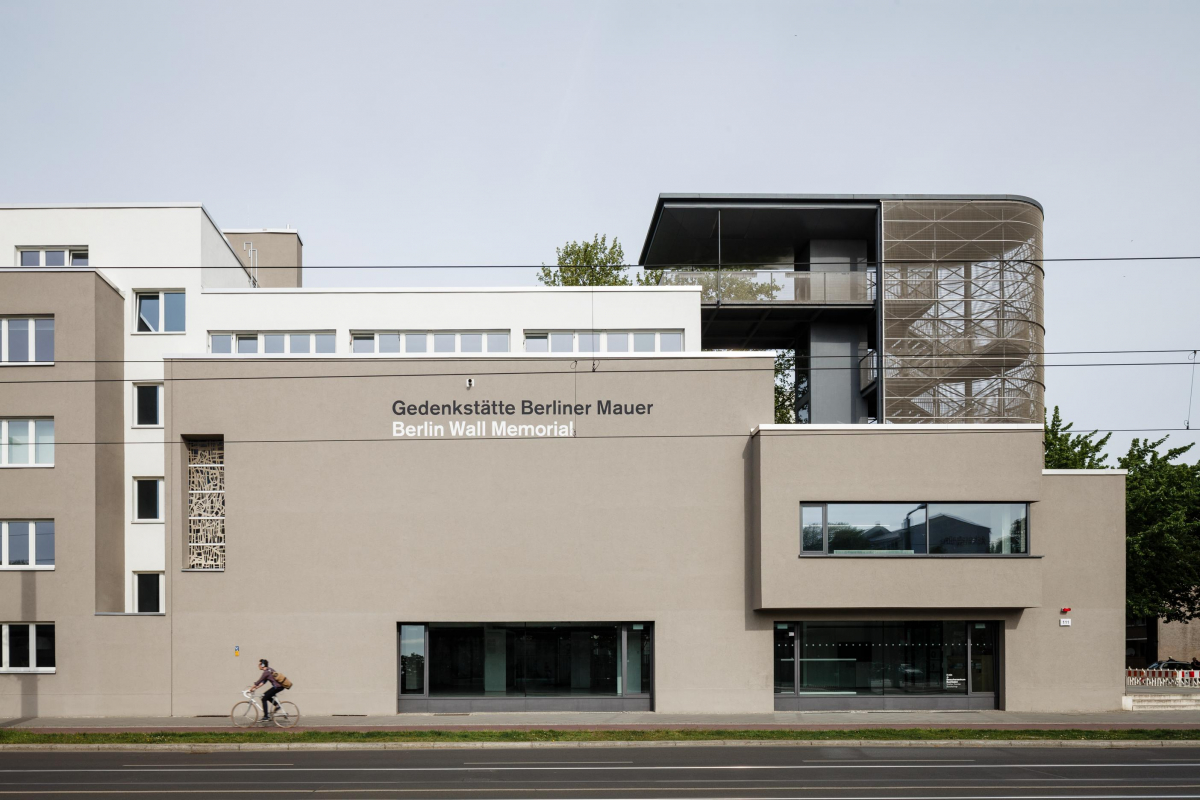
One of the most important memorial sites dedicated to the Berlin Wall runs along Bernauer Straße. The Berlin Wall Memorial is dedicated to documenting the history of Berlin from the construction to the fall of the Wall.
The memorial commemorating the era of the Wall is located on Bernauer Straße. The street, which marked the border between Wedding (West) and Mitte (East), was the site of tragic escape attempts. People from the sealed-off East Berlin threw themselves out of the windows of their homes to reach the free West. Thirty-seven years after construction of the Wall began, on August 13, 1998, Berlin dedicated the Wall Memorial at the corner of Ackerstraße.
Avoiding Dramatic Effects
The memorial deliberately avoids dramatic effects, aiming instead to be a place of reflection. Based on an idea by Sven and Claudia Kohlhoff, an 80-meter-long stretch of borderland was enclosed by two six-meter-high steel walls. Slits in these walls allow a view into the death strip.
Chapel of Reconciliation and Documentation Center
The memorial complex includes a documentation center and the Chapel of Reconciliation, which was built on the site where the GDR had a church demolished in 1985 for border security reasons. In early December 2009, the new visitor center on Bernauer Straße was inaugurated.
Original border installations at the Berlin Wall Memorial
In May 2010, the first section of the new memorial site on Bernauer Strasse was opened. The exhibition area stretches 350 meters in length and covers one hectare. The area is part of a 1.3-kilometer-long memorial trail that connects original border installations and artistically designed memorial sites along Bernauer Strasse.
The Berlin Wall Memorial is one of the historical sites of the Berlin Wall Foundation.